Business Intelligence & Quality
HOME – BUSINESS INTELLIGENCE & QUALITY





Data-Driven Decisions for Strategic Healthcare Excellence
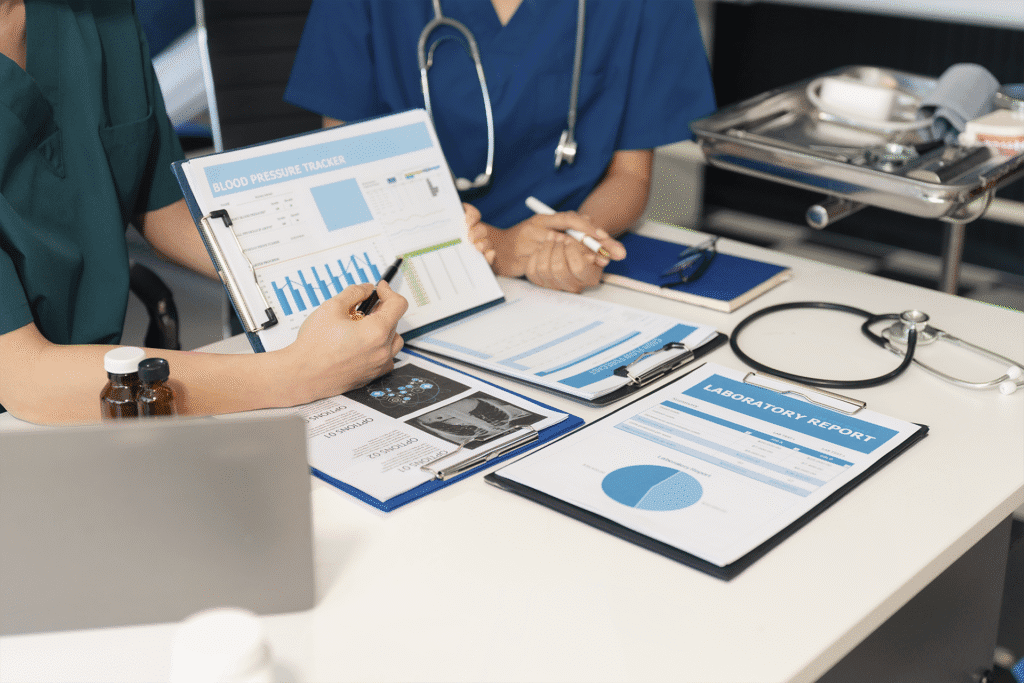
Our Business Intelligence & Quality Management solutions transform raw clinical and operational data into actionable insights that drive strategic decision-making and continuous improvement. By aggregating data from all hospital systems—clinical, financial, operational, and quality—the platform provides executives, department heads, and quality officers with real-time visibility into performance across every dimension of healthcare delivery, enabling evidence-based decisions that improve outcomes while optimizing resources.
Advanced analytics capabilities include data mining to identify patterns and trends, predictive modeling to forecast patient volumes and resource needs, benchmarking against national standards, and drill-down analysis from enterprise-level metrics to individual patient encounters. Interactive dashboards present complex information in intuitive visualizations—graphs, heat maps, trend lines, and scorecards—that make insights immediately accessible to stakeholders at all levels of the organization.
Quality management tools enable systematic monitoring of clinical outcomes, patient safety indicators, compliance metrics, and accreditation requirements. Automated data collection eliminates manual chart review burden, while statistical process control identifies variations requiring investigation. From tracking hospital-acquired infections to measuring patient satisfaction, from monitoring readmission rates to ensuring regulatory compliance, the platform provides the infrastructure for data-driven quality improvement across your entire healthcare enterprise.
- Executive Dashboards
Real-time executive dashboards providing at-a-glance views of organizational performance across clinical, financial, and operational domains. Customizable KPI tracking includes patient volumes, bed occupancy, emergency department throughput, surgical case volume, revenue cycle metrics, and quality indicators. Mobile access enables executives to monitor performance from anywhere, while drill-down capabilities allow investigation of variances and identification of improvement opportunities.
- Clinical Analytics
Deep analysis of clinical outcomes, treatment effectiveness, and care pathway performance. Track mortality rates, complication rates, length of stay, readmissions, and disease-specific quality measures. Compare physician performance, identify best practices, and detect clinical variations that may represent opportunities for standardization. Evidence-based protocols can be evaluated quantitatively to demonstrate improved outcomes and support clinical decision-making.
- Financial & Operational Intelligence
Comprehensive financial analytics covering revenue cycle performance, cost per case, payer mix analysis, charge capture optimization, and denials management. Operational metrics include resource utilization, staff productivity, supply chain efficiency, and equipment utilization rates. Profitability analysis by service line, department, and procedure enables strategic planning and resource allocation decisions based on actual performance data rather than assumptions.
- Quality & Safety Monitoring
Automated tracking of quality indicators including Core Measures, Patient Safety Indicators (PSIs), Healthcare-Acquired Conditions (HACs), and hospital-specific quality metrics. Real-time monitoring enables rapid identification and response to adverse events. Trend analysis identifies systemic issues requiring process improvement. Benchmarking against national databases provides context for performance evaluation and goal setting.
- Regulatory Compliance & Reporting
Streamlined preparation of regulatory reports for Joint Commission, CMS, state health departments, and other accrediting bodies. Automated data extraction from clinical systems eliminates manual chart abstraction, reducing workload and improving accuracy. Audit trails document compliance with policies and procedures. Alert systems notify quality staff of compliance gaps requiring attention before they become citations.
- Data Mining & Predictive Analytics
Advanced analytical tools using machine learning algorithms to identify hidden patterns, predict future trends, and support proactive decision-making. Applications include patient risk stratification, readmission prediction, demand forecasting, and resource optimization. Population health analytics enable identification of high-risk cohorts for targeted interventions. Predictive models continuously improve as more data becomes available, increasing accuracy over time.
Ready to Transform Data into Strategic Advantage?
Discover how our Business Intelligence & Quality solutions can provide the insights you need to drive performance improvement, optimize operations, and deliver exceptional patient care. Schedule a demonstration today.
- FAQs
Frequently Asked Questions About Business Intelligence & Quality
How current is the data shown in the dashboards?
Dashboards update in real-time or near-real-time depending on the metric. Clinical and operational data typically refreshes every 15-30 minutes, while some indicators update instantly as events occur. Financial data may be daily or weekly depending on billing cycle. Users can see timestamp information showing data currency for any metric displayed.
Can we customize dashboards for different roles in our organization?
Absolutely. The platform supports role-based dashboards tailored to specific needs—executives see strategic metrics, department heads view operational performance, and quality officers monitor clinical outcomes. Users can also create personal dashboards focusing on metrics most relevant to their responsibilities. Permissions ensure users access only data appropriate to their role.
How do you ensure data accuracy across multiple source systems?
Our data warehouse employs sophisticated validation rules, data cleansing algorithms, and reconciliation processes to ensure accuracy. Source system data is validated during extraction, transformed consistently using business rules, and loaded with integrity checks. Any discrepancies trigger alerts for investigation. Regular audits compare BI system totals against source systems to verify accuracy.
Can we benchmark our performance against other hospitals?
Yes, the system includes benchmarking capabilities comparing your performance against regional and national databases. We can configure peer group comparisons based on hospital size, teaching status, geographic region, or other relevant factors. Benchmarking helps identify performance gaps and opportunities for improvement by showing how you compare to similar institutions.
What training is required for staff to use the BI tools effectively?
The intuitive interface requires minimal training for dashboard viewing and basic reporting. Most users become proficient within 1-2 training sessions. For advanced users creating custom reports or performing deep analysis, we provide comprehensive training programs. Self-service tools empower users to answer their own questions without IT intervention while maintaining data governance.
How do you protect sensitive data in BI reports and dashboards?
Multi-level security controls protect sensitive information. Role-based access ensures users see only data appropriate to their position. PHI is de-identified in aggregate reports while remaining accessible to authorized clinical users. Audit logs track who accessed what data and when. All data transmission is encrypted, and the system meets HIPAA security requirements for protected health information.